
This is one of the most common questions families ask when planning a trip to Hawaii, and it’s a fair one. Hotels on the islands are genuinely beautiful — the pool bars, the concierge service, the daily housekeeping. We’re not here to dismiss any of that.
But if you’re traveling with kids, grandparents, a group of couples, or anyone who wants something more than a place to sleep between activities, the vacation rental vs. hotel Hawaii family conversation usually ends up landing somewhere pretty clear.
Here’s an honest look at both options, and how they actually play out for families.
Space and Privacy: The Difference Is Real
A standard hotel room in Hawaii — even a nice one — gives you somewhere between 400 and 600 square feet. For two adults and a couple of kids, that works for a night or two. For a week? It’s tight. Shared bathrooms, suitcases open on the floor, no room for anyone to have a quiet moment without stepping over someone else.
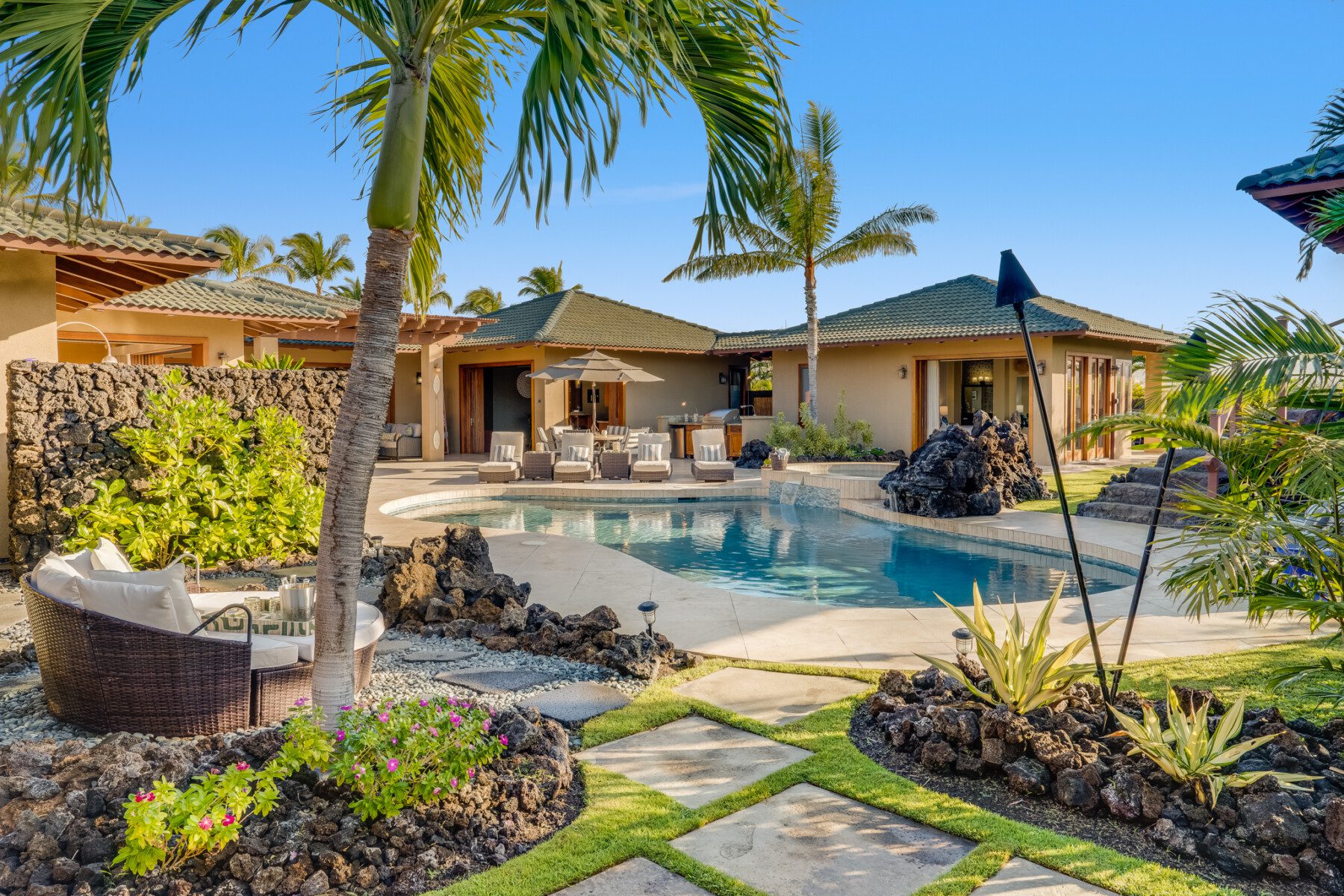
A vacation home like Hale Mele gives you nearly 4,000 square feet of single-level living space, multiple bedrooms with their own bathrooms, indoor and outdoor areas to move between, and the kind of layout where not everyone has to be in the same room at the same time. For multigenerational families — grandparents and grandkids, or a mix of families traveling together — that spatial separation is what makes the trip actually enjoyable rather than just logistically managed.
Privacy matters too. Your own entrance, your own pool, your own patio. No elevator rides, no shared hallways, no neighbors’ TVs through the wall.
The Kitchen: Quieter Mornings and Real Savings
If you’ve ever watched a hotel breakfast buffet line at 8 AM in peak season, you already know why this matters.
A full kitchen in a vacation rental changes how you move through each day. You can make coffee and feed the kids before anyone’s fully awake. You can stock the fridge with snacks, fruit, and lunch items so beach days don’t require a restaurant stop every time someone gets hungry. You can cook a real dinner on the nights when everyone’s tired from the sun and nobody wants to get dressed up and go out.
The savings add up quickly. A family of four eating three meals out in Hawaii — especially on the Kohala Coast, where restaurant prices reflect the resort area — can easily spend $200 to $300 a day on food alone. Groceries change that math significantly.
That doesn’t mean you’re cooking every meal. There are genuinely excellent restaurants near Mauna Lani, and part of a great Hawaii trip is going to them. But having the option to eat in, on your own schedule, in your own space, is one of the practical advantages that families consistently mention.
The Pool Situation
Hotel pools on the Kohala Coast are often beautiful and well-staffed, with swim-up bars and lounge chairs and all of it. They’re also shared with every other guest at the property, which means they can be crowded, loud, and — during peak travel periods — hard to find a chair at.
Having your own private pool means you use it when you want, for as long as you want, without competing for space. Kids can splash around without worrying about bothering other guests. You can float in it before breakfast or after dinner without it being a production. Families traveling with toddlers especially appreciate the lower-stakes environment of a private pool versus a large shared one.
A Local Host vs. a Front Desk
Hotels are staffed by professionals who know their property and their brand standards. That’s not nothing — it’s reliable and consistent.
But it’s different from having an owner-host like Peter Gosch who genuinely knows the area and will actually answer your messages. When you have a question about where the best snorkeling is right now, or whether a beach is calm enough for young kids this week, or where locals actually go for dinner — that kind of specific, current, personal knowledge is hard to get from a front desk. It comes from someone who lives there and cares how your trip goes.
That relationship — host to guest, rather than property to customer — is part of what makes a well-run vacation rental feel different.
Flexible Schedule, Your Own Rhythm
Hotels have checkout times. They have breakfast service windows. They have the implicit schedule of a shared space where other people are also trying to do things.
A vacation home runs on your schedule. Sleep in. Take your time over breakfast. Leave for the beach when you’re ready, not when you’ve had to clear out of a room. If the kids need a nap in the afternoon and you want to stay in, stay in. If dinner feels like it should happen at 5 PM because everyone’s exhausted from snorkeling, eat at 5 PM.
For families with young children, or for multigenerational groups where different people have genuinely different energy levels, the flexibility of not being on anyone else’s clock is one of the most underrated parts of renting a vacation home.
Who Is a Vacation Rental Actually Best For?
We’ll be direct: vacation rentals aren’t the right fit for every trip or every traveler.
If you’re traveling solo or as a couple for a short trip and you want amenities, spa access, and nightly turndown service, a resort hotel is probably the better choice and you’ll enjoy every minute of it.
But for families with kids, multigenerational groups, multiple couples traveling together, or anyone planning a week-long stay who wants to actually settle in and live somewhere for a while — a well-run vacation home in a good location tends to be the better experience. More space, more flexibility, more connection to the place you’re visiting.
Hale Mele is designed for exactly that kind of trip. It’s recognized by Condé Nast Traveler as one of the top family-friendly Airbnbs of 2024, and the guests who return tell us the same thing: it felt like home.
Ready to See the Difference?
Take a look at what Hale Mele offers — the space, the location inside the Champion Ridge gated community at Mauna Lani, the amenities — and see if it fits what your family is looking for.
to learn more or book your stay directly.