
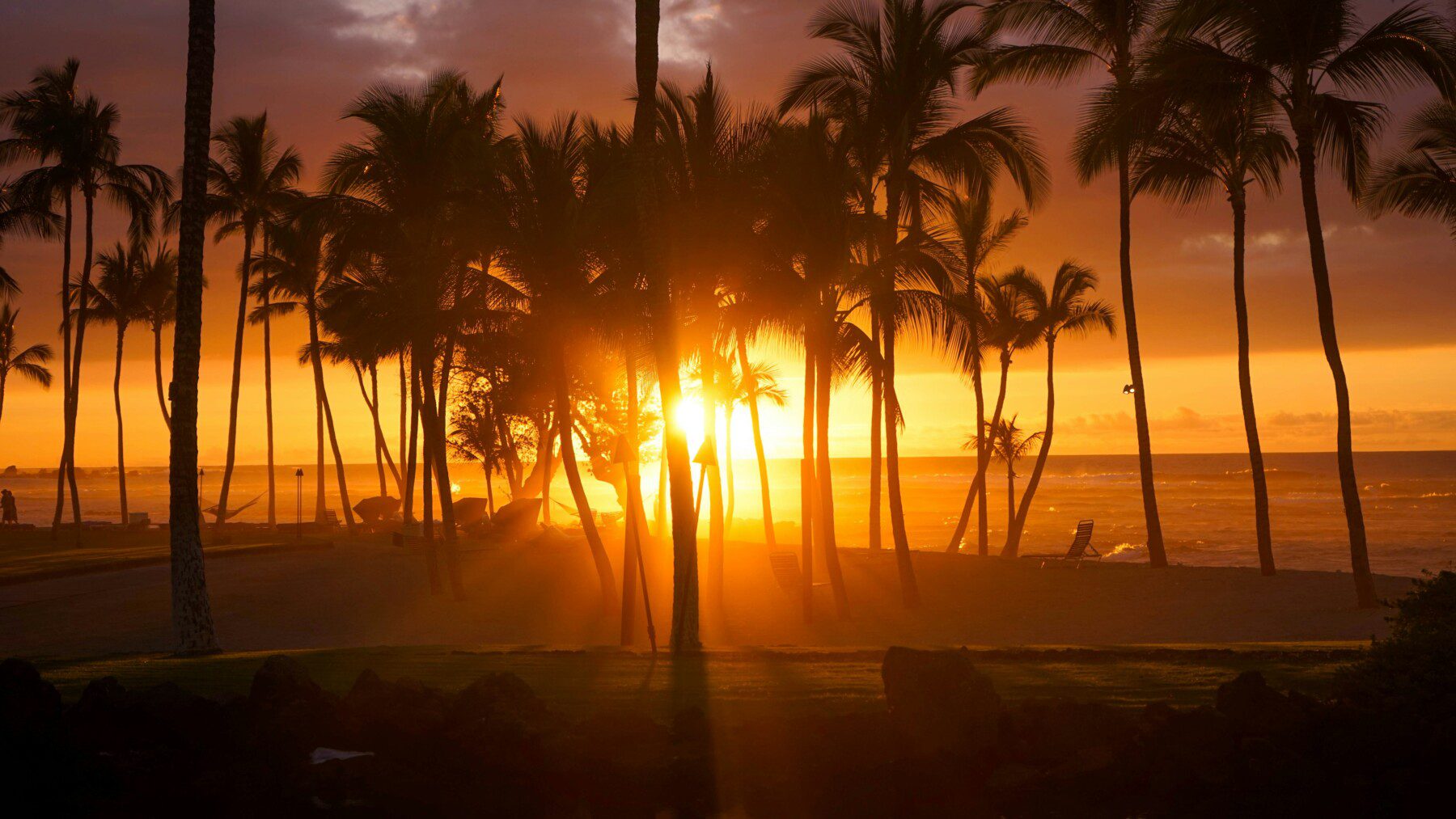
There’s a version of a Big Island trip that most people plan — July, ocean-front resort, peak summer crowds — and then there’s the version that people who’ve been here a few times actually prefer. Fall on the Kohala Coast is quieter, more accessible, and in several ways more beautiful than the peak summer weeks that get all the attention.
These are five reasons we genuinely look forward to hosting guests in September and October.
1. The Ocean Is at Its Clearest and Calmest
By the time fall arrives, summer’s gentle swell patterns have settled the water along the Kohala Coast into near-flat conditions that last most of the season. The winter swell — which brings larger surf and choppier water to some beaches starting in November and December — hasn’t arrived yet.
The practical result is that snorkeling conditions at Pauoa Bay, Makaiwa Bay, and the rocky points at Hapuna are excellent. Visibility can stretch twenty feet or more on a calm morning. For families with children, beginners, or anyone who’s had a disappointing snorkel experience in poor conditions elsewhere, the fall water here is a revelation. The ocean is also the warmest it will be all year — water temperatures peak in September and October, reaching into the high 70s Fahrenheit.
If getting in the water is central to your trip — and for most guests it is — fall is the season to book.
2. The Crowds Thin Out After Labor Day
The shift that happens on the Kohala Coast after the first week of September is noticeable and real. Families on mainland school schedules have returned home. The resort community is less full. Parking at Hapuna Beach, which fills by 9 AM on a July Saturday, is reliably accessible well into mid-morning in September. Restaurants are easier to get into. Trails feel like yours.
September visitor arrivals on the Big Island run roughly 16 percent below the annual average — the lowest of any month on the calendar. October follows close behind. That reduction translates directly into a different quality of experience: more space, less noise, a pace that matches what most people are actually coming to Hawaiʻi to feel.
We notice it at the home too. The neighborhood is quieter. Morning walks through the resort paths feel genuinely peaceful. There’s an ease to fall at Mauna Lani that summer — as good as it is — doesn’t quite replicate.
3. Humpback Whale Season Is Building on the Horizon
The first humpback whales typically begin arriving in Hawaiian waters in November and December, with numbers peaking in January and February. By late fall, early sightings are starting to generate conversation on the island.
In September and October, the anticipation is part of what makes the season feel particular. You’re here in the calm before one of nature’s most extraordinary annual events. Guests who visit in fall and return in January to see the whales consistently describe it as two completely different versions of the same place — and both versions worthwhile in their own right.
If whale watching is a priority, January and February are the peak. But fall is when the island is at its most spacious, and the whales are not far off.
4. The Weather on the Kohala Coast Stays Consistently Beautiful
The Kohala Coast’s geography — sheltered by the mountains, in a natural rain shadow — means that the weather here doesn’t change dramatically with the seasons. September and October bring the same sunny, trade-wind-cooled days that make this stretch of coast consistently ranked among the best climates in Hawaiʻi.
Daytime highs run in the low 80s. The trade winds are consistent and cooling without ever being cold. Evenings are balmy enough to sit outside after dinner without a layer. There’s no humidity spike, no oppressive heat, no rainy season adjustment to make.
The Kohala Coast in fall is essentially the Kohala Coast at its most uninterrupted. The weather that people come here for — year-round — is exactly what fall delivers, without the peak-season pressure that surrounds it.
5. Better Availability, More Flexibility, Often Softer Rates
This is the practical reason that veteran Hawaii travelers use, and it’s worth saying plainly: fall is when accommodations, restaurants, and activities are easier to book and often less expensive than peak season.
September is consistently among the most affordable months for Hawaii travel — flights from the West Coast ease against summer and holiday peaks, and vacation rental availability opens up in ways that peak season simply doesn’t allow. For families who’ve been priced out of a summer Hawaii trip or who want more flexibility in building their itinerary, fall is the window to take seriously.
Beyond the economics, there’s something to the flexibility itself. The ability to decide on a Wednesday morning that you want to go to Volcanoes National Park on Thursday — without scrambling for accommodation or worrying about sold-out tours — changes how the trip feels.
A Few More Reasons to Choose Fall on the Big Island
Fall on the island also brings a few experiences worth noting. October is harvest season at Kona coffee farms along the slopes of Hualalai and Mauna Loa — the cherries are ripening, and some farms offer tours during this period. The Ironman World Championship, one of the most iconic endurance sports events in the world, takes place in Kona in October and is a remarkable spectacle even for non-athletes. If you’re visiting mid-October, plan around it — or plan for it.
Why Fall Is One of Our Favorite Times to Host
Across the seasons we’ve had guests at Hale Mele, fall stands out. The home, the neighborhood, and the Kohala Coast all feel particularly easy in September and October. Guests settle in faster. Days feel longer. There’s a rhythm to the week that peak season sometimes interrupts.
We love summer here too. But if you ask us honestly when the place is most genuinely itself — when the pool, the lanai, the beach mornings, and the quiet evenings all come together the way we hoped they would — fall is often the answer.
See availability and book your fall stay at halemele.com.
Photo by Michael Olsen on Unsplash